How a Hybrid Company Could Make Performance Measurement Fairer Across Locations
An illustrative look at how a hybrid tech company could apply the same objective time data to office and remote workers alike — reducing proximity bias and making performance reviews more consistent.
Illustrative scenario. This is a composite example based on typical WorkComposer deployments — not a specific named customer. The company, figures, and quote are illustrative and show how the product is used, not guaranteed results.
Illustrative outcomes for a scenario like this
Scenario Profile
Picture a mid-size technology company building enterprise software, with around 120 employees across engineering, product, sales, and customer success. It runs a hybrid model where employees choose office, remote, or flexible schedules — so on any given day a chunk of the team is in the office and a chunk is fully remote.
- Total Employees
- ~120 people
- Mix
- Office + remote
- Work Model
- Hybrid (employee choice)
- Key Need
- Fair measurement
The Challenge
Perception of Unfair Treatment Between Office and Remote Workers
- Visibility Bias and Proximity Bias
Office workers felt they were perceived as more productive simply because they were visible to management. Remote workers felt disadvantaged during performance reviews and promotion decisions, believing their contributions were undervalued compared to in-office colleagues. This created resentment and damaged team cohesion.
- Inconsistent Performance Measurement
Managers had no objective way to measure productivity across work locations. Office workers' contributions were informally observed, while remote workers' output lacked context. Performance reviews relied on subjective impressions rather than data, leading to perceived unfairness and disputes during review cycles.
- Top Talent Retention Risk
Several high-performing remote employees threatened to leave, citing unfair treatment and lack of recognition. They felt their work was invisible compared to office colleagues who had face-time with leadership. Exit interviews revealed that perceived bias—not actual compensation or workload—was driving top talent away.
- Hybrid Policy Controversy
The company's flexible hybrid policy faced internal criticism. Some managers wanted to mandate office attendance, believing remote workers were less productive. Others defended remote flexibility as essential for talent retention. Without objective data, leadership couldn't make evidence-based decisions about hybrid work policy.
The Solution
Unified Time Tracking Across All Work Locations
The company implemented WorkComposer universally across all employees—office, remote, and hybrid—creating equal visibility into productivity regardless of work location. The goal was fair, objective performance measurement that eliminated proximity bias and restored trust in the hybrid work model.
- 1. Universal Implementation Across All Locations
- WorkComposer was deployed to every employee—whether working from the office, home, or flexible locations. This eliminated the perception that only remote workers were being monitored. Everyone operated under the same system with the same metrics, creating fairness through universal application.
- 2. Location-Agnostic Performance Metrics
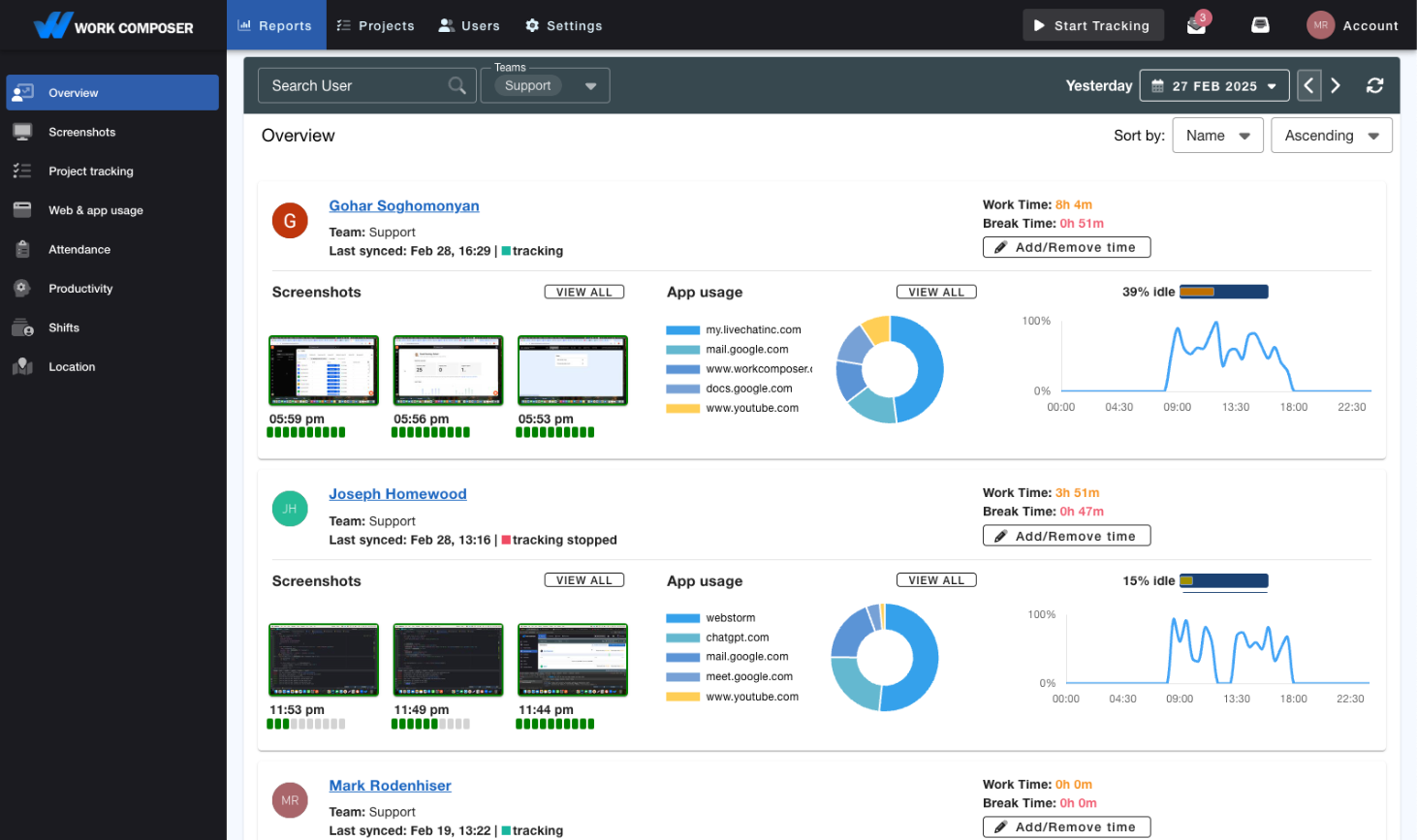
- The system tracked productivity based on work output and task completion, not physical location. Managers viewed the same dashboards for all team members regardless of where they worked. Performance reviews became data-driven, comparing actual output rather than visibility or office attendance.
- 3. Transparent Data Access for All Employees
- Every employee could see their own productivity data and understand how they were being measured. This transparency eliminated suspicion about unfair tracking or bias. Employees appreciated knowing they were evaluated on the same objective criteria as their colleagues, regardless of work location.
- 4. Data-Driven Hybrid Work Policy Decisions
- Leadership used aggregate productivity data to validate the hybrid work model. The data showed no productivity difference between office and remote workers, ending the debate about mandatory office attendance. This evidence-based approach supported employee choice while maintaining accountability.
Implementation
Fair Rollout Across All Work Locations Simultaneously
Leadership announced the universal implementation emphasizing fairness—everyone would be measured the same way, regardless of location. All-hands meetings addressed concerns about monitoring, explained the fairness rationale, and emphasized that the goal was eliminating bias, not surveillance.
Deployed WorkComposer to all 120 employees on the same day—office, remote, and hybrid workers. Conducted identical training sessions for all groups. Emphasized that everyone operates under the same system with the same metrics, ensuring no group felt singled out or disadvantaged.
Trained all managers to interpret productivity data objectively without considering work location. Created standardized performance review templates using the same metrics for all employees. Emphasized using data to support decisions rather than relying on visibility or proximity impressions.
Performance discussions now draw on objective productivity data, so both remote and office employees get data-backed reviews. In a scenario like this, perceived fairness typically rises sharply compared with the prior subjective, visibility-driven reviews.
Potential Results
The Kind of Impact a Hybrid Company Could See
The outcomes below are illustrative of what teams in this situation tend to aim for — not measured results from a specific customer.
- ✓Equal Performance Visibility
- Managers get the same view of productivity for every employee regardless of location, so reviews can compare actual output rather than office presence — removing proximity bias from the criteria.
- ↑Higher Perceived Fairness
- When everyone is measured the same way and can see their own data, both remote and office workers tend to feel evaluated objectively — which raises perceived fairness over visibility-driven reviews.
- ★Stronger Talent Retention
- When remote workers feel their contributions are finally visible and valued, the high performers who might otherwise leave over perceived bias are more likely to stay.
- 📊Evidence on the RTO Debate
- Objective data on output by location gives leadership real evidence for decisions about office attendance, rather than relying on assumptions about who is more productive where.
- ↑Higher Satisfaction with Hybrid
- Flexibility paired with fair, data-backed measurement tends to lift overall satisfaction with a hybrid policy — and can become part of how the company is known as an employer.
- ↓Less Bias in Promotions
- Data-backed advancement decisions help ensure remote employees aren't passed over simply because they have less face time — supporting performance-based rather than proximity-based promotion.
Why hybrid companies take this approach
Hybrid policies often create division — remote workers feel undervalued, office workers feel scrutinized. The draw is one objective measure applied to everyone, so reviews and promotions turn on output rather than where someone sits.
This scenario is illustrative. To see how consistent, location-agnostic data fits your review process, the place to start is a free trial.
Related Solutions
Explore How WorkComposer Can Help Your Hybrid Team
Remote Team Time Tracking
Build trust and accountability across distributed teams without micromanagement.
Employee Accountability
Transparent accountability tools that respect autonomy and build trust.
Software Development
Optimize engineering productivity with data-driven insights across all work locations.
Ready to transform your team's productivity?
Join 200,000+ users tracking time smarter. Start your free trial today—no credit card required.
- Setup takes less than 5 minutes
- Full access to all features
- Cancel anytime, no questions asked
- Dedicated support to get you started